If you’re interested in occasionally volunteering in a group for those in need in the Twin Cities while staying safe from COVID-19, then contact me.
If you built an army of volunteers, what values would you instill in them to keep the culture together? Kevin asked just that. How would we answer Kevin?
Humble Service
Community
Reality
Respect For Others
Humble Service: This is the meaning of life for us. It is in our blood. It gives us energy. It aligns how we view ourselves and the world. We don’t get so full of ourselves to think that we are above any other person. We know that giving creates more giving, which creates a better world for all. Humility gives us a hunger to always be open and learning. We serve others because that’s how we orient our lives toward good in the world and away from distractions.
Community: We build a community of doers. We volunteer and serve with each other. We create bonds through shared experiences. We lean on each other for support. We empower each other to try new things. We push each other to increase our service impact. It’s a group of individuals formed by a common goal and purpose. It’s about We.
Reality: Do you feel out of touch? Come see what the real world is like. Your daily life is nothing like what others experience. Come see what real people are living through. In particular, let’s expose ourselves to others going through difficult situations. They could be just like you. The reality is, this could be you. So, the ones who have it easier are responsible to help others who need help. Understanding the full breadth of human experience will enrich your life and give gratitude for the little blessings.
Respect For Others: This dose of reality gives us respect for others, no matter who they are. Understanding how difficult circumstances affect normal people enables us to see that people are just people. But some are going through harder circumstances than others, and they need our help. They deserve our respect. We do not believe that any people are less deserving of respect because of their lifestyle, choices, or circumstances.
My brother just graduated from university to join the working world. As a typical older brother does, I decided to offer my unsolicited advice.
No, we don’t know what’s going on with COVID-19. No, we don’t know exactly how companies should address social issues. But we are figuring it out. It’s a work in progress. Companies, like people, are always changing.
Employment is a transaction. The company treats it as such. Look at the job description and pay. Your employment is an exchange of value: delivering the stated items on the job description in return for value.
In response to their expectations, you can prepare. Be clear about what you want to get out of your employment. List out three things that you’ve learned at every stage in your life. Then come up with three things during this transaction (thank you to Dave Kerwar for this suggestion!).
For example, at your previous employment you learned:
Work-life balance
How to work as an individual contributor as a team
Technical knowledge of data integration
Then at your next stage in life, you can learn through:
Ownership of projects, work-streams, projects, or services
Experience of how different business units work together
Management of a team of people
The company will pay you for the value you give them. But state a few non-monetary things you want out of the experience, and the smart company will be happy to give you more of it. You work more on the things you enjoy, which gives the smart company more value. It’s a win-win.
To do this, you’ve got to be honest about what three things you want out of the employment transaction. The smart company will be doing the same.
In July of 2018, I got engaged. Six months earlier, this was not a possibility.
I wasn’t ready for marriage for a long time. But it was hard to articulate why not. I finally decided on three things that would make me ready.
We must tell each other our deepest, darkest secrets. Have trust and openness through vulnerability. Trust is the bedrock of a good relationship. If you cannot tell your spouse your deepest secrets and thoughts, who can you tell? To truly become one, you must fuse all that you have: strengths and weaknesses. If we hold back, this could cause trust issues in the future.
Earn independence from others around us, even family. We must operate on our own and choose to be us, wherever we go. We must be able to be a distinct unit. We must make our own decisions as full adults rather than relying too much on family ties. Often, an over-emphasis on outside forces rather than the relationship can sow discontent. Love for family comes from choice, not from obligation.
Finances go into one shared bucket: not two, but one. What affects one of us affects both of us. We must be able to talk about money and value before getting married. That way, we get those ideas out in the open. Finances cause most of divorces, so why don’t we talk about these ideas first before we make that commitment.
In reality, we made the goals concrete by writing them down. Then we accomplished them together. She was especially excited to tackle tasks that were concrete. Before, we were floating along with no direction, not knowing if we were getting closer to commitment or further.
After accomplishing the tasks, I stood by my word. I could think of no other reason to delay marriage other than my own fear of the unknown and the change that would be required to adapt to it. But change can be good.
I did more than resolve the reasons why I did not want to get married. In fact, I learned reasons why I wanted to: gains beyond one person could ever achieve:
Self knowledge and self-improvement
Touched by the divine, following our ancestors’ path
Paying respects to our ancestors
Following in the ancestors’ path by tying ourselves to another
Love beyond passion: the love that stays when lust is gone
So, we jumped in. Here’s to one year and many more to come.
I completed my first triathlon on Saturday, July 11th, 2020 with friends. It was an amazing experience. This triathlon is the first of many for me. I am planning to take on longer triathlon distances. So, this was a good test.
Stats
International Distance: 800m Swim, 24.8 mile Bike, 6.2 mile Run
Actual Distances Recorded with Garmin Forerunner 945: 856m Swim, 25.36 mile Bike, 6.25 mile Run
21:42 800m Swim (2:18 per 100m pace)
2:24 T1
1:17:29 Bike (19.6 mph, 331W or 3.7W/kg normalized power)
1:45:19 Overall time at Bike finish
1:54 T2
1:01:28 Run
2:48:41 Overall time at Run finish (5th)
Temperature: Mostly sunny, 74F -> 81F with 60-75% humidity (hot but not scorching)
Summary
For future triathlons, I should switch my mindset from “me against others” to “me against myself.”
Reflections
Swim –> Good! Need to reduce heart-rate.
I did better than expected on the swim. I hadn’t trained for the swim because I stopped in March due to pools closing from COVID-19. I swam once on the course a few days before the event.
I started behind the stronger swimmers. I followed their lines. I tried a new approach of taking a breath on one stroke, and then looking ahead above the waterline on the other stroke. I switched stroking sides only a few times.
I took the pace steady. I was breathing without too much effort. I was mostly relaxed and not tense. However, my heart rate was still high for the duration of the swim–tempo pace rather than base pace.
T1 –> Solid!
The first transition from swim to bike was good. 2-3 minutes is a good transition time. I was a bit dizzy but not delirious. My heart-rate was high throughout the transition, so I didn’t relax too much. I didn’t know where others were. I knew some were ahead but I didn’t look behind to see where I was in the pack.
Bike –> Too excited, too hard!
I’m a stronger at biking than the other areas. I was pushing it hard after a few minutes of eating a Gu, drinking some water, and getting my gloves on. There were a few stops at red-lights. But I was pushing at relatively close to my FTP for the duration (about 90% of FTP). And near the end, with a few miles to go, I got excited. I had excess energy. I ramped up the effort. I realized I could maybe catch up to the leaders. I gapped some other riders who were pacing it more steady. My heart-rate was high for the bike: at tempo pace rather than base pace. I finished strong. I had switched my mindset to trying to win.
T2 –> Fine
I was fast during T2, with less than 2 minutes. By then, I was in race mode. I was ready to hit the run hard and overtake the leaders, wherever they were on course. My feet were wet from the swim in my socks, so I changed my socks. However I could have spent more time drying my feet before changing, because the 2nd socks got wet, too. I had planned to eat another Gu, but my stomach was uncomfortable so I didn’t.
Run –> Overextended
The run started off fine in the first mile, around 8:21 pace. It was a hard first mile though. My legs were wobbly and my arms were weak. My stomach was very uncomfortable from the fluids I chugged during the bike. After 1.5 miles, I wretched after a water stop. The 2nd mile and 3rd miles were slower, in the 9:00s and 10:00s. At that point I had to start walking up some hills. My heart-rate was way too high even while running at the relatively slower pace. I caught up with my wife Sahyli who was just doing the run. We walked & ran together for about 1.5 miles. Then for the last 1.5 miles I ran through the finish, increasing the pace.
For the duration of the run, I hit the wall. My legs were slow and feeling like molasses; my breathing was labored and heavy; my stomach was upset the whole way. At 2 miles in, I switched my mindset from trying to win to trying to finish without dropping out. I passed a few runners and was passed. I had a small sprint in the last half-mile. I was exhausted by the finish line.
For next time
For longer triathlons, I should maintain a new mindset: finish the race against myself. The mindset should not be trying to win. I saw the benefits of racing “me against myself” in the swim. As a result, I mostly ignored other competitors, not worrying about “trying to keep up.” I was in tune with my body and cadence. I finished the swim with energy and clarity and confidence.
The bike was my chance to make up time, so I switched my mindset to trying to race my competitors. I finished the bike ride tense and with a sense of urgency. This caused undue stress. Instead, I should spend more time listening to my body and relaxing for the ride. Since I am stronger biker, I can ease up on the effort and still manage a good time.
For the run, I can start out waaaaaay slower for the first mile. I should practically be at a fast walking pace around 10:00 min/mile. This is to shake up the legs from the bike and get them used to the effort. And especially, I should manage my heart-rate to get it down to a tempo pace rather than a hard anaerobic effort. After steadying the heart-rate to a manageable rate, I can steadily speed up the pace while maintaining that heart-rate.
There is a lot of excitement coming out of transition, but that adrenaline wears off within the first few minutes of the run.
I had one Gu before the swim and one Gu before the bike. After the bike, my stomach was feeling bad so I didn’t have another one. I drank almost 2L of water during the bike. One Liter was mixed with supplement and another Liter was regular water. I chugged the water too fast, causing serious discomfort for the run. I’ve got to take smaller sips during the bike. And I should drink water on the run rather than being a camel and storing the water on the bike. There were a couple of water stops on the run but I only had a couple of sips from paper cups. I didn’t pee for the whole race, nor did I feel the need to.
I should also consider carrying a water bottle for the run because I sweat a lot. And I should take some salt sticks or similar easy-to-consume nutritions for the run.
The run is a hard transition after the bike, and so I should continue to practice bricks to simulate the transition with high fatigue.
Reality is how we talk about it. In times of chaos and change, it’s helpful to backtrack to some fundamental order and start over. Genesis (translated by Robert Alter 039331670X)is one example we can read to remind ourselves what’s real.
Bottom Line Up Front
What if reality is a chaos soup: cells and atoms bouncing around. Humans evolved to survive and thrive in the chaos soup over many lifespans. To do this, the collective consciousness of humanity started to recognize patterns in the chaos. They did this by bootstrapping a biological tool: language.
This tool gave the emergent human collective brain a way to set order from the chaos. Humans recognized the cells and atoms consistently bouncing around into a drinkable source of water. We named “stream” as a “drinkable source of water.” This shared understanding gave power to each individual within the collective to navigate the world using “streams” for drinking water and finding fish. This ability is so powerful and so unlikely that it seems God-given. Genesis explains the origin of reality as the use of language. Furthermore, the text relies on the same tool to communicate itself down through generations of humans.
Example
In Genesis, God speaks reality. In the first six days, God creates things. The biblical text follows a structure of God “saying” things, then God saying the words, which results in: “so it was.” Creation comes from speaking into being.
“And God said, “Let the waters under the heavens be gathered in one place so that the dry land will appear,” and so it was.” (Alter, 4)
Since the steps of “saying” and “so it was” are separated by an “and,” it’s not clear whether God does two actions or one. It seems as though the speaking suffices without any other action. Speaking is the magic here: by invoking language to call a pattern of chaotic soup into a name which can then interact with other named things. Humans can then navigate this system of named representations much better than the chaos soup.
Every word has meaning and contributes to reality. How we use language builds our world. Being honest and speaking truth builds a more durable reality.
Was language the reason why reality exists as it does to us today? Could God use any other tool to create this reality other than language?
My one year wedding anniversary is coming up. What have I learned in (almost) 1 year of marriage?
We’ve grown in our love for each other. We made the right decision for us. We face challenges and joys every day. Relationships require mutual, active effort to be successful. These are common learnings.
There are three less obvious things I noticed:
1. Generally, people give a higher baseline of respect to a married person than to a single person. We think a married person is a bit less likely to be a crazy psycho, because someone else has latched onto them for life. Who would latch onto a crazy psycho? It’s one less thing to worry about when meeting someone who’s married. That’s a benefit because now I have less to prove in new interactions.
2. Others expect that we consult each other on big decisions now. Before, I rarely heard “Are you dating? Why don’t you get back to us after you ask your girlfriend?” Why do that if there’s no legal basis for me asking her, other than being on the same page in my relationship? She wouldn’t have the legal rights and privileges to represent me. But now, what’s mine is hers and hers is mine. So any decision for the family must come from both of us. So now there’s an expectation when I hear: “Oh, you’re married? Why don’t you get back to us after you ask your wife?” This expectation affects how we make choices. I’m more used to consulting her on even smaller items now, which is positive because it encourages more open communication and decision-making.
3. We aren’t that old couple in the diner that sits in silence, enjoying each other’s company without talking. They don’t say anything because there’s nothing else to talk about. They’ve already discussed all topics and ideas and events. For us, that’s not the case. We are always experiencing new situations and growing as individuals, and we experience these changes together. Our conversations have continued to deepen as we explore the world together. We talk about injustice, travel, and plants.
The world has no shortage of novelty that we take on together. Life is a learning adventure, and I’m still at the starting line.
Every month, I make one significant change of my life to add a new beneficial habit or to undo an unhealthy habit. These healthy habits stay with me after the month ends, and I’m onto the next one.
This month of June, 2020, I am putting in effort to notice when I perpetuate racism. And when I notice it, I am taking responsibility to stop it.
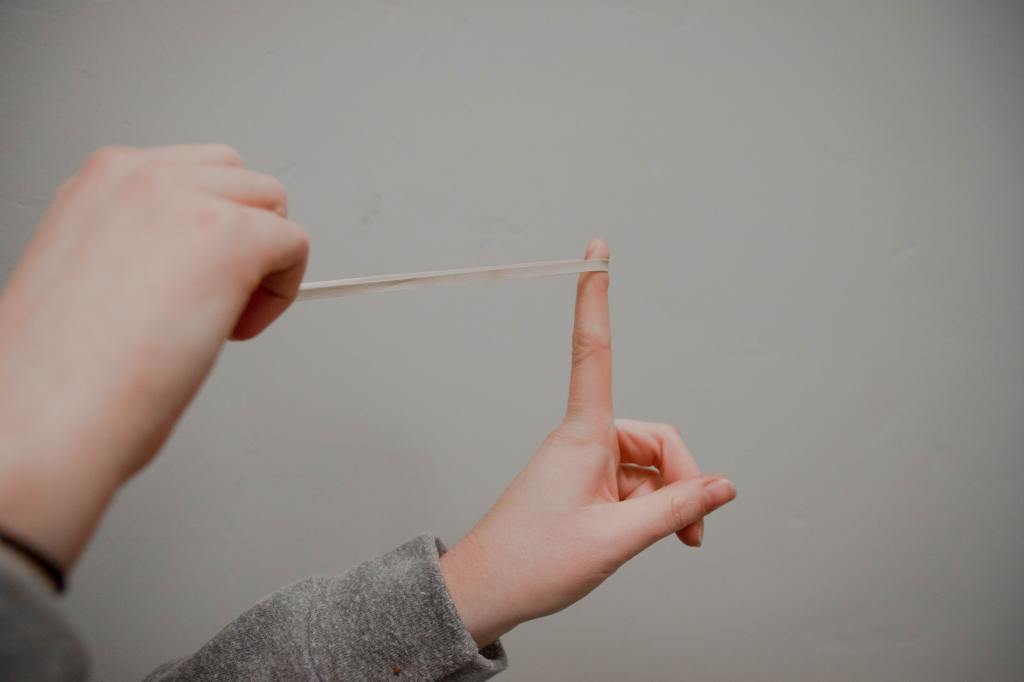
I am wearing a rubber band when I go out. Whenever I judge someone unfairly based on their race, then I will snap the rubber band against my wrist. The pain associated with the previous action trains me to not do the previous thing. I am training myself to not be racist.
When I make this judgment on race, I restrict the opportunity for others to prove their character. This is unfair. If many people do this a few times every day, then this is systemic racism.
Human behavior is complex. There are many other factors that contribute to differences in outcomes, such as wealth or attractiveness. Wealthier people and more attractive people have more opportunities and are more successful. But these topics are beside the present issue, which is race: the color of your skin should not dictate your opportunity because that’s how our country is supposed to work.
We cannot throw the baby out with the bathwater; to say that we cannot solve all injustices and so we shouldn’t solve any. Rather, we can start with one: race.
It is constitutionally unfair that our country is designed to give all Americans equal opportunity, but in practice, this doesn’t happen to different races. If black Americans face more barriers to opportunities for justice and education and competition based on their race, whereas I am privileged to get the most opportunities because I am white, then our system is not working as designed and it needs to change.
There’s a difference between unfair outcomes and unfair opportunities. If two students take the same test in the same school and get different scores on a test, this is a difference in outcome. But if possession of drugs is a crime in one zip code and therapy in another zip code, this difference of outcome is likely pointing to a difference in opportunity.
Furthermore, if there has been overt racism in policies that restrict opportunities by race, then getting rid of a racist policy doesn’t mean the racism is gone forever. It could be written into our inner lives from our past. For example, historical Minneapolis housing covenants specifically restricted housing opportunities by race. The neighborhoods that formed as a result have not instantly changed in less than a century. Thus, this injustice could be playing out in individual interactions (or lack of) on a daily basis.
I am a vehicle of cultural systems. The ideas from culture flow through me. Most ideas are positive. But many are negative, such as racism. Even if I am not a racist (which is not guaranteed) and thus I do not come up with my own racist thoughts, it’s still my responsibility to stop systemic racism from flowing through me into my thoughts and behaviors.
Throughout history, things come from other things. Offspring emerges from parents. Physically, matter changes forms. Metaphysically, things change into other things. How does this happen? Consider two explanations.
(A) all stuff is already created
Thus, new things emerge by splitting up the existing stuff amongst them
(B) new stuff emerges from old stuff
Thus, new things emerge as distinct from the old stuff
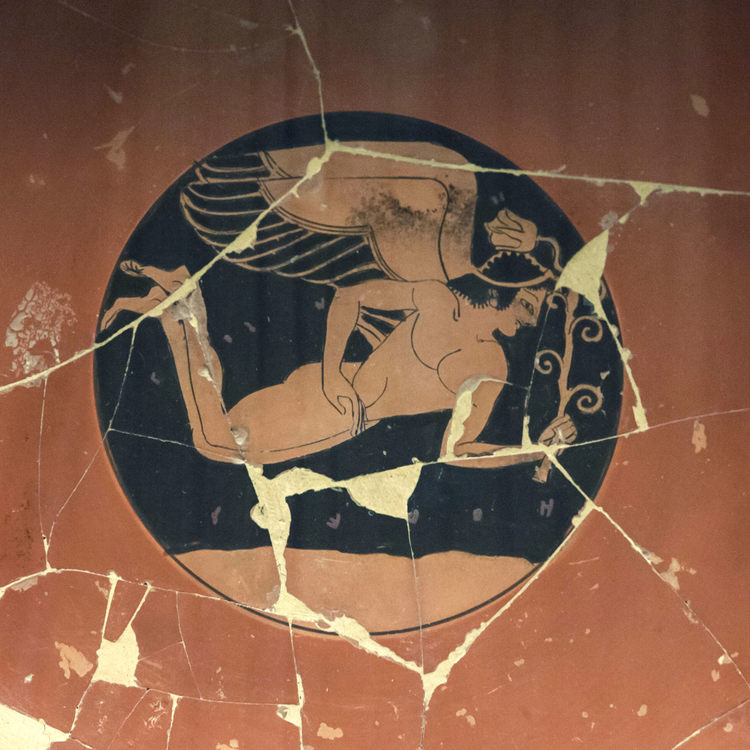
The Greeks thought of the changing process as a force with a personality: a god: Eros. Eros was the god of love and sex. Through Eros, parents beget children and things become other things. In Theogony, Hesiod pulls together all the popular stories of his day into one meta-narrative. In doing so, he explains where things come from and how they change.
AH-HA
Let’s consider (A) and (B) in some examples from Theogony.
1. Earth produces Sky, Mountains, and Sea.
This seems to be (A). Our planet Earth includes features like sky, mountains, and sea. Thus, Eros can split up Earth into those parts sky, mountains, and sea.
2. Night + Darkness = Day and Brightness.
This seems to be (B). Night has a quality of darkness, which is the absence of light. Day has a quality of brightness, the opposite of darkness. Seemingly, Night does not have the qualities that Day has. So, Night produces something entirely new when Day emerges.
Alternatively, maybe the Greek idea of Night included brightness, and Eros split it up into two: Day and Night. Certainly, in modern language, a “day” can refer to either the daytime and brightness for 12 hours, or the full scope of brightness and darkness for 24 hours.
3. Earth + Sky = Titans, Cyclopes, and Hundred-Handers.
This is not clear whether it’s (A) or (B). The offspring of Earth and Sky seem to have personalities and “souls” like humans do. Whereas Earth and Sky should be like non-living material. How would conscious life emerge from pure physical matter except as new emerging from old, like (B)?
However, the Greek beings Earth and Sky are actually beings that are closer to living than non-living material. This makes (A) more possible to have Titan beings emerging from other living beings.
4. Theia (Titan, “goddess”) + Hyperion (Titan, “he who goes above”) = Sun, Moon, and Dawn.
This is closer to (B) but not clear. This doesn’t make sense in a modern perspective. How could two Titans, beings closer to humans than materials, produce the non-living material Sun, Moon, and Dawn? This appears like the opposite of #3: non-living things emerge from living beings.
Summary
Hesiod does not detail how beings are born or how things become other things, whether through (A) or (B). But Theogony still ties together an important narrative to explain the high-level transfer of ideas and concepts among beings. It shows generally where things come from.
In our modern day, we delve into science to explain the world. As we discover the micro-steps that details how matter changes at a small scale, let’s keep the big picture in mind, like Hesiod did. Maybe it’s ok to build and believe a story that leaves out the details but gives us an explanation of the world at a higher level.
In Theogony, Hesiod pulls together all the popular stories of his day into one narrative. Since it’s one narrative explaining the common thread of many narratives, let’s call it a meta-narrative.
Meta-narrative = an overarching account or interpretation of events and circumstances that provides a pattern or structure for people’s beliefs and gives meaning to their experiences. – Oxford Dictionary
AH-HA
The Greeks wanted one narrative story that tied together all the common stories of their day. Through the one common meta-narrative, the Greeks found knowledge of their shared human condition.
The stories of Theogony include the massive Titans, the powerful Zeus, the forethinker Prometheus giving knowledge to man, and the gods’ punishment in response: the first woman Pandora who unleashes a box of evils upon humankind. Lightning bolts tore the sky and babies emerged from the force of love. From top-down, these stories justified worldly events and human behavior.
From bottom-up, a narrative is formed by human biological processes that interpret the world; these processes manifest as human behaviors; these combine into archetypes (“good” behaviors and “bad” behaviors); archetypes then map to language in a narrative story.
Different human people groups create different types of stories. This is because the biological processes and worldly events differ. Humans in arctic adopt different behavior than those in the desert.
But even in disparate people groups, common narratives emerge. For example, many groups strangely spoke about the common Flood Myths. Since the events and behaviors in the Flood narrative appear so widely, a catastrophic flood may have occurred and affected many humans in recent history. Or, many humans have experienced a tragic calamity that destroyed lives and resources. So, a flood should be in our human meta-narrative.
Humans thus share a common drive to “prepare for the flood,” by sacrificing present pleasure for the future benefits: e.g. by working to exchange time for money, or by social distancing to trade short-term contact for long-term health.
Summary
Narratives emerge from many different groups. A meta-narrative like Theogony incorporates all narratives. Thus, it explains what’s common among all of the narratives it uses. The commonalities are what we share. What we share is what it means to be human.
I recently joined Online Great Books, “an online community developing classically educated men and women using the Great Books of Western Civilization.” Thus far, we have read Homer’s Iliad and Odyssey, Aeschylus, Euripides, and we’re about to start Plato. Each month we have a virtual seminar to discuss ideas that we found interesting. In parallel, I’m also in a seminar to discuss creation stories; we have read the Enuma Elish, the Epic of Gilgamesh, and Theogony by Hesiod.
I love it. I highly recommend joining if you are able. Or at least trying it out. I’m reading more and thinking critically. And I’m appreciative of the great things that persist.
In meditating on and discussing these works, certain ideas pop out to me. Some as “AH HA!” and some as “WTF!”.
Thus this is the first of a series of meditations on the ideas from great books that apply to life today, inspired mostly by the ideas of others in my seminars: #037 and #creation. Thanks team!
Euripides I: Alcestis, Medea, The Children of Heracles, and Hippolytus
Euripides is known as the last great tragedian. This is probably because he pushed the limit of storytelling. His characters acted rationally enough while pushing the limit of believability. I think he fills the role of the last tragedian because anyone trying to one-up Euripides would have had to jump over the line into ridiculousness.
WTF
What’s the edge of what humans can do? Race 26.2 miles: easy to believe. Race 3,100 miles: less easy to believe.
In Medea, Medea is a powerful, rash, and logical woman who has used selfish acts to get her way. She betrayed her family by killing her own brother to help Jason, her husband. Later, Jason betrays Medea and their marriage oath by taking a mistress. In response, Medea plots and then murders his mistress by tricking her to wear a fancy dress that burns into her flesh. Medea then kills their own children. And literally rides off with their bodies unburied into the sunset on a chariot while Jason looks on in horror.
The storytelling is masterful because even though Medea toils between feeling pity for her innocent children vs. anger in cold blood, she can understand both sides: mercy and revenge. However, she is consistent in her behavior and self-justification by always acting to fulfill revenge. But, even though she commits heinous acts, her anger is believable and justifiable. She follows her anger to the end but justifies her decisions every step of the way. Medea’s character straddles chaos justified into order.
What would Euripedes’ successor have to do to make the sequel to Medea? Tricking Jason into eating his parents? Maybe infanticide in revenge was the evilest but most plausible act by the Greeks. Anything beyond this would reach parody beyond believability.
AH HA:
Battles of rhetoric with witty insults from emotional confrontations are universally enjoyable for us to watch. Euripides includes two levels of battle. Phase one involves long paragraphs of one character going at the other. Then phase two is one-liners back and forth in quick succession. The play acted out seems like a real battle. Each shoots at one another with their slings and arrows from a distance. Then they get closer, fighting hand-to-hand, jabbing and countering.
In Alcestis, Admetus has a chance to save his life from his fated death. Death, personified, pursues him. A god saves him by telling Admetus that he can save his own life by picking a family member to die in his place.
This may seem like a strange thought experiment, but it’s applicable to today. Who decides who lives and dies if a COVID-19 outbreak hits an underprepared hospital without enough beds?
Admetus first asks his parents, who refuse. Then he asks his wife Alcestis, who accepts and dies in his place. Props to Alcestis for going the honorable route: I think this is why the play is called Alcestis, to honor her sacrifice.
Anyway, after Alcestis dies, Admetus confronts his father Pheres about why he wouldn’t sacrifice himself for his son. The following insult battles are compelling. Keep in mind, this was ancient Greece and not Shakespeare.
Part of Admetus’ soliloquy to his father as a “battle phase one”:
“Go on, get you other children – you cannot do it too soon – who will look after your old age, and lay you out when you are dead, and see you buried properly. I will not do it. This hand will never bury you.”
Medea and Jason share some blows back-and-forth from their story as well as a “battle phase two”, after Jason confronts Medea about their kids.
Jason: “O my poor children, what a vicious mother yours has proved to be.”
Medea: “O my poor boys, what a sad end you’ve met, thanks to your father’s failing.”
J: “It was not by my hand they died.”
M: “It was, though, because of your own arrogance and your new-saddled marriage.”
Summary
Stories throughout history still capture our interest by maintaining believability while pushing the limits of what’s possible. Anything outside of believability enters into comedy and parody.
Intellect and wit can be used as an attack, similar to physicality and technology. Throughout history, we appreciate and enjoy fights, either with swords or words.





 And Flow