Back to the beginning: Reality From Language – OGB #4 Genesis by Robert Alter

Reality is how we talk about it. In times of chaos and change, it’s helpful to backtrack to some fundamental order and start over. Genesis (translated by Robert Alter 039331670X) is one example we can read to remind ourselves what’s real.

Bottom Line Up Front

What if reality is a chaos soup: cells and atoms bouncing around. Humans evolved to survive and thrive in the chaos soup over many lifespans. To do this, the collective consciousness of humanity started to recognize patterns in the chaos. They did this by bootstrapping a biological tool: language.

This tool gave the emergent human collective brain a way to set order from the chaos. Humans recognized the cells and atoms consistently bouncing around into a drinkable source of water. We named “stream” as a “drinkable source of water.” This shared understanding gave power to each individual within the collective to navigate the world using “streams” for drinking water and finding fish. This ability is so powerful and so unlikely that it seems God-given. Genesis explains the origin of reality as the use of language. Furthermore, the text relies on the same tool to communicate itself down through generations of humans.

Example

In Genesis, God speaks reality. In the first six days, God creates things. The biblical text follows a structure of God “saying” things, then God saying the words, which results in: “so it was.” Creation comes from speaking into being.

“And God said, “Let the waters under the heavens be gathered in one place so that the dry land will appear,” and so it was.” (Alter, 4)

Since the steps of “saying” and “so it was” are separated by an “and,” it’s not clear whether God does two actions or one. It seems as though the speaking suffices without any other action. Speaking is the magic here: by invoking language to call a pattern of chaotic soup into a name which can then interact with other named things. Humans can then navigate this system of named representations much better than the chaos soup.

Every word has meaning and contributes to reality. How we use language builds our world. Being honest and speaking truth builds a more durable reality.

Was language the reason why reality exists as it does to us today? Could God use any other tool to create this reality other than language?

What I learned from (almost) 1 year of marriage

Bali, circa 2019

My one year wedding anniversary is coming up. What have I learned in (almost) 1 year of marriage?

We’ve grown in our love for each other. We made the right decision for us. We face challenges and joys every day. Relationships require mutual, active effort to be successful. These are common learnings.

There are three less obvious things I noticed:

1. Generally, people give a higher baseline of respect to a married person than to a single person. We think a married person is a bit less likely to be a crazy psycho, because someone else has latched onto them for life. Who would latch onto a crazy psycho? It’s one less thing to worry about when meeting someone who’s married. That’s a benefit because now I have less to prove in new interactions.

2. Others expect that we consult each other on big decisions now. Before, I rarely heard “Are you dating? Why don’t you get back to us after you ask your girlfriend?” Why do that if there’s no legal basis for me asking her, other than being on the same page in my relationship? She wouldn’t have the legal rights and privileges to represent me. But now, what’s mine is hers and hers is mine. So any decision for the family must come from both of us. So now there’s an expectation when I hear: “Oh, you’re married? Why don’t you get back to us after you ask your wife?” This expectation affects how we make choices. I’m more used to consulting her on even smaller items now, which is positive because it encourages more open communication and decision-making.

3. We aren’t that old couple in the diner that sits in silence, enjoying each other’s company without talking. They don’t say anything because there’s nothing else to talk about. They’ve already discussed all topics and ideas and events. For us, that’s not the case. We are always experiencing new situations and growing as individuals, and we experience these changes together. Our conversations have continued to deepen as we explore the world together. We talk about injustice, travel, and plants.

The world has no shortage of novelty that we take on together. Life is a learning adventure, and I’m still at the starting line.

Using a rubber band to fight racism

Whenever I do something, I do it small.

Every month, I make one significant change of my life to add a new beneficial habit or to undo an unhealthy habit. These healthy habits stay with me after the month ends, and I’m onto the next one.

This month of June, 2020, I am putting in effort to notice when I perpetuate racism. And when I notice it, I am taking responsibility to stop it.

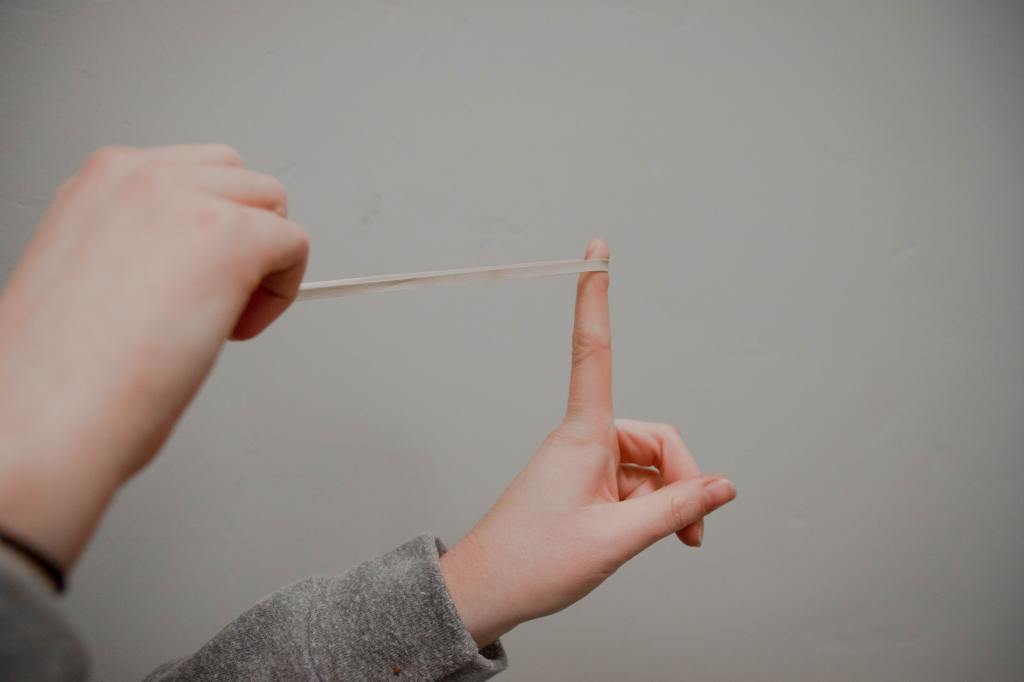
I am wearing a rubber band when I go out. Whenever I judge someone unfairly based on their race, then I will snap the rubber band against my wrist. The pain associated with the previous action trains me to not do the previous thing. I am training myself to not be racist.

When I make this judgment on race, I restrict the opportunity for others to prove their character. This is unfair. If many people do this a few times every day, then this is systemic racism.

Photo by NeONBRAND on Unsplash

Human behavior is complex. There are many other factors that contribute to differences in outcomes, such as wealth or attractiveness. Wealthier people and more attractive people have more opportunities and are more successful. But these topics are beside the present issue, which is race: the color of your skin should not dictate your opportunity because that’s how our country is supposed to work.

We cannot throw the baby out with the bathwater; to say that we cannot solve all injustices and so we shouldn’t solve any. Rather, we can start with one: race.

It is constitutionally unfair that our country is designed to give all Americans equal opportunity, but in practice, this doesn’t happen to different races. If black Americans face more barriers to opportunities for justice and education and competition based on their race, whereas I am privileged to get the most opportunities because I am white, then our system is not working as designed and it needs to change.

There’s a difference between unfair outcomes and unfair opportunities. If two students take the same test in the same school and get different scores on a test, this is a difference in outcome. But if possession of drugs is a crime in one zip code and therapy in another zip code, this difference of outcome is likely pointing to a difference in opportunity.

Furthermore, if there has been overt racism in policies that restrict opportunities by race, then getting rid of a racist policy doesn’t mean the racism is gone forever. It could be written into our inner lives from our past. For example, historical Minneapolis housing covenants specifically restricted housing opportunities by race. The neighborhoods that formed as a result have not instantly changed in less than a century. Thus, this injustice could be playing out in individual interactions (or lack of) on a daily basis.

I am a vehicle of cultural systems. The ideas from culture flow through me. Most ideas are positive. But many are negative, such as racism. Even if I am not a racist (which is not guaranteed) and thus I do not come up with my own racist thoughts, it’s still my responsibility to stop systemic racism from flowing through me into my thoughts and behaviors.